

Positioning the camera for close ups
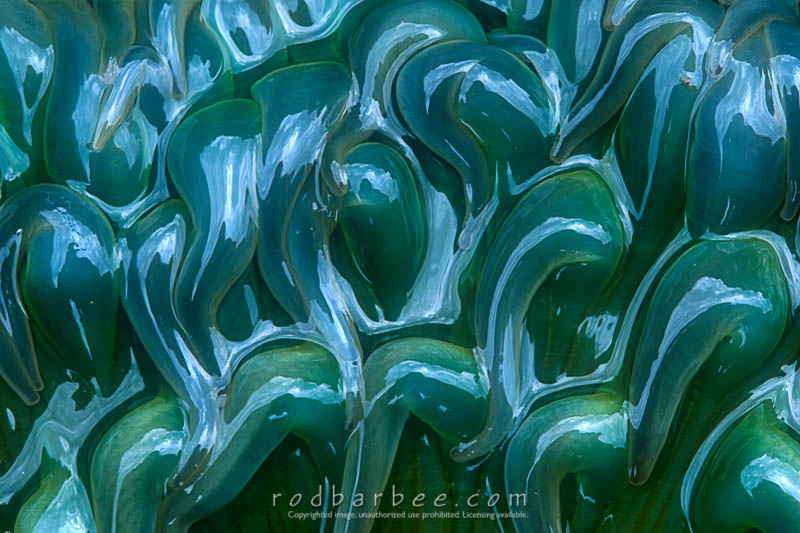
Depth of field becomes a primary issue in close up photography. As magnifications increases, depth of field decreases. What this means in practical terms is that as you get closer to your subject, you'll have less and less depth of field to work with. And when you start getting into higher magnifications, like 1:1, depth of field can be measured in millimeters, even at small aperture openings. Since you have such limited depth of field to work with, camera positioning becomes very important. Getting the back of the camera as parallel to the subject (or the important part of your subject) as possible will maximize what depth of field you do have.
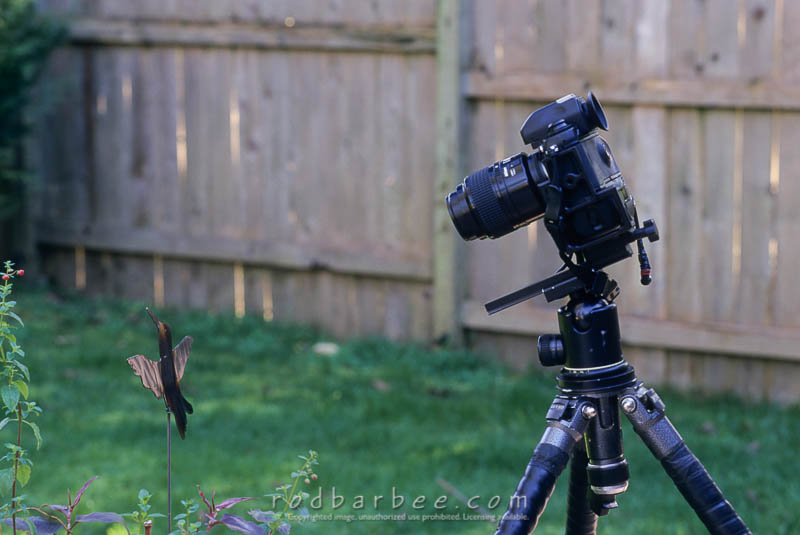 The pair of pictures on the left were shot at the same aperture setting (don't ask me what it was, this was shot on film and I didn't keep track. It doesn't matter anyway). As you can see in the top picture, the camera is placed at an angle to the subject. This results in the first picture below where only a very narrow band in the middle of the picture, where I focused, is in focus and the top and bottom of the picture are out of focus.
 In the bottom picture, I've moved the camera so that back of the camera is parallel to the subject. This results in the entire hummingbird sculpture being in focus, as you can see by clicking on the image below and revealing the "after" picture.
It's not always easy to get the camera in the needed position to maximize your depth of field. In fact, close up photography can be the most strenuous kind of nature photography. I've passed up many a close up shot because I knew the effort involved, and the particular situations weren't good enough to put myself through those contortions. But when you've got a great subject, in a great situation, and a great background, then all the backaches and knee strains are worth it (see the anemone picture above).
Below images shot with a Nikon F5, Nikon 105mm micro lens. Settings not recorded.


Metal hummingbird sculpture.